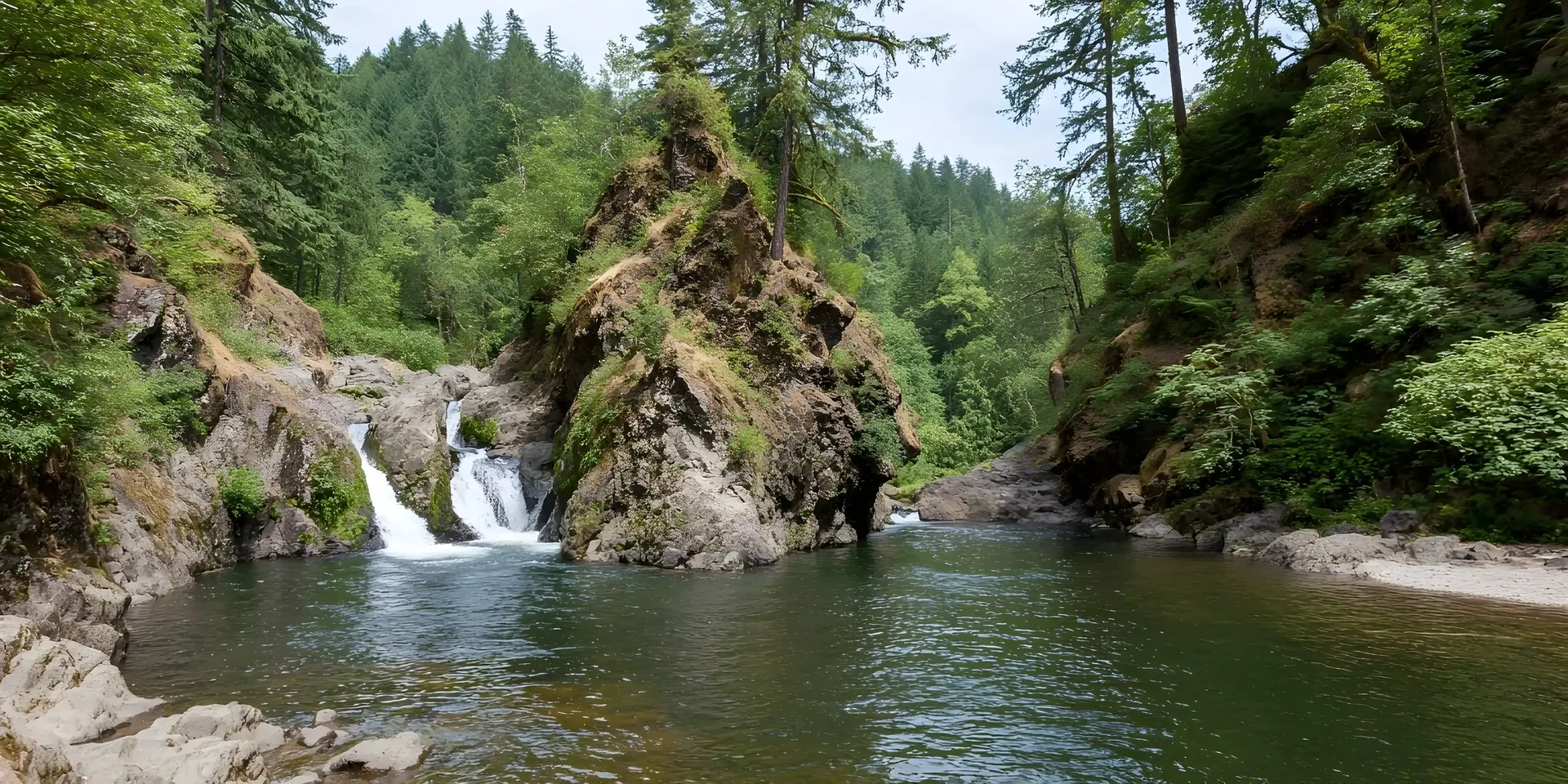
Portugal has one national park. Just one — and most visitors to the country never find it. Peneda-Gerês sits in the far northwest corner of Portugal, bordering Spanish Galicia, a landscape of granite peaks, ancient oak forests, wild rivers, and stone villages where people have lived the same way for centuries. It covers 700 square kilometres, contains over 100 endemic plant species, and is home to wolves, golden eagles, wild boar, and a small herd of Garranos — the prehistoric wild horses that have roamed these mountains since before recorded history.
This is not a manicured nature reserve with visitor centres and boardwalks. It is a functioning, living landscape where farming communities still practise transhumance (seasonal movement of livestock between high pastures and winter valleys), where Roman roads cross the mountains, and where the silence on a weekday morning is the kind that makes city dwellers stop walking and listen. If you are visiting northern Portugal, Gerês is the most distinctive thing you can do — and the least likely to appear on anyone else's Instagram.
The Park — Geography, Zones & What to Expect
The park divides into four main massifs: Peneda in the northwest (the most remote and least visited), Soajo in the centre-west (famous for its hilltop espigueiros — granite grain stores), Amarela in the centre, and Gerês in the east (the most visited, with the main resort town of Caldas do Gerês). Each has a distinct character, and a thorough visit requires at least two or three days.
The landscape changes dramatically depending on altitude. The valleys are verdant and green — fed by rivers that fill with snowmelt in spring and remain clear and swimmable all summer. The high ground opens into moorland and granite plateau, where Garranos roam freely and weather can change within an hour. The park receives significantly more rainfall than the rest of Portugal — which is why it is so extraordinary green and why its waterfalls run strong even in August.
Best Hikes in Peneda-Gerês
Trilho da Cascata do Arado (PR1 GER)
The most popular trail in the park for good reason — a 4-kilometre loop through oak woodland to the Arado waterfall, with a natural swimming pool at the base. Suitable for most fitness levels. Can be crowded at weekends in July–August; go early morning or on a weekday. The swimming pool below the waterfall is one of the finest natural bathing spots in northern Portugal.
Caminho dos Arredores (PR4 GER)
A 14-kilometre circular walk from Campo do Gerês through the Albergaria valley. You pass through old oak forest, cross ancient stone bridges, and enter an area where Garranos are regularly seen. The route includes sections of Roman road — actual paved Roman road, 2,000 years old, still used as a walking path — which is extraordinary.
Trilho da Pedra Bela (PR5 GER)
A 9-kilometre route that climbs to the Pedra Bela viewpoint (1,114 metres), offering views over the Cávado reservoir and the surrounding massifs. The climb is steady rather than steep; the views from the top are the finest panoramic perspectives in the park. Allow 4–5 hours round trip.
Via Romana XVII
For those who want to walk a longer distance, this Roman road route traverses the heart of the park. The road was built by Roman legions and subsequently used for two millennia; some sections have been maintained, others are rougher. A two-day walk with an overnight in a village offers the definitive Gerês experience.
Natural Swimming Pools & Waterfalls
The rivers of Gerês — fed by the highest rainfall in Portugal — create some of the most beautiful natural swimming spots in the country. The water is genuinely clean and clear; in many spots you can see the bottom clearly at 4–5 metres depth. These are not municipal pools with attendants; they are mountain rivers with variable depths and currents. Assess carefully before entering, particularly after rainfall.
Cascata do Arado
The most accessible of the park's waterfalls, at the end of the PR1 trail. A 20-metre cascade into a granite-rimmed pool where the water is so clear it looks like glass. Arrives crowded by 11am on summer weekends; either arrive at 8am or accept the company.
Poço Azul (Blue Hole)
Near Ermida village, a deep, extraordinarily clear pool fed by a waterfall. The colour of the water — a deep, impossible blue against the granite — is what gives it the name. One of the most photographed natural spots in northern Portugal. Less crowded than Arado because it requires a short walk to reach.
Fecha de Barjas Waterfall
In the Peneda sector (the northwest, rarely visited), a 40-metre waterfall cascades off a granite cliff face. The hike to reach it passes through ancient village ruins and oak forest. Best in spring (April–June) when the water volume is highest. Almost always empty of other visitors.
The Ancient Villages — Soajo, Lindoso & Beyond
The villages within and around Gerês are among the most authentic in Portugal — places where the rhythm of life has changed less than almost anywhere else in the country. Stone houses, communal ovens, mountain springs, and the extraordinary espigueiros (elevated grain stores) that are unique to this region of northwest Iberia.
Soajo
A small hilltop village with the finest collection of espigueiros in Portugal — 24 granite granaries arranged in a group on a rocky outcrop above the village, some dating from the 18th century. They are raised on granite pillars (to keep rodents out), ventilated through their stone sides, and still used to store maize by the village farmers. Nothing like them exists elsewhere in Europe. Soajo village itself is a beautiful place to spend an afternoon.
Lindoso
Another espigueiro village, with a medieval castle commanding views over the Lima river valley into Spain. The 60+ espigueiros around the castle walls create one of the most surreal rural landscapes in Portugal. The border with Spain is 2 kilometres away; on clear days the Galician mountains are visible from the castle walls.
Pitões das Júnias
The most remote and dramatic village in the park — a tiny community at 1,000 metres altitude, reached by a narrow mountain road. Near the village, the ruins of a 12th-century Cistercian monastery sit above a spectacular waterfall. Almost no tourists reach this far. The feeling of arriving is extraordinary.
Wildlife — Wild Horses, Wolves & Eagles
The Garranos (also called Garrano or Minho horse) are perhaps the most affecting wildlife encounter the park offers. A small, hardy breed that has survived in these mountains since prehistoric times — genetically distinct from all domestic horses, living in semi-wild herds on the high moorland. They are particularly visible on the Albergaria plateau above Campo do Gerês, where herds of 10–20 animals can be seen grazing at dawn.
The park is one of the last refuges of the Iberian wolf in Portugal. Wolves are present in significant numbers but nocturnal and extremely cautious — the chances of a daytime sighting are low. Organised dawn/dusk wildlife watches with park guides offer the best opportunity. Signs of wolf activity (tracks, kill sites) are more commonly found than the animals themselves.
Golden eagles nest in the park and are regularly spotted soaring above the high ground, particularly around the Soajo and Peneda massifs. The park also contains the largest population of roe deer in Portugal, significant wild boar numbers, otters along the rivers, and over 200 bird species including red kite, black stork and the increasingly rare lesser kestrel.
Activities Beyond Hiking
Mountain biking has grown significantly in Gerês in recent years. The park's network of forest tracks, Roman roads and mountain paths creates excellent routes at various difficulty levels. Bike hire is available in Caldas do Gerês and in Arcos de Valdevez. Several guided cycling tour operators also work in the park.
Canoeing and kayaking on the Cávado river (the main river running through the Gerês sector) and the Arade reservoir offer a different perspective on the park's landscape. Several outfitters in Campo do Gerês and Caldas run guided half-day and full-day river trips.
Horse trekking through the park — on the same mountain paths used for centuries — is one of the most atmospheric ways to experience Gerês. Operators work from several villages and offer routes of 2–6 hours, some of which pass through the Garrano ranges where you may encounter wild herds.
The thermal baths at Caldas do Gerês have been operating since the 19th century. The mineral-rich water comes from hot springs deep in the granite and is used both medicinally and for relaxation. A thermal bath session after a day's hiking is one of the more satisfying experiences the park offers.
Getting There & Where to Stay
A car is essential for visiting Gerês properly. The park's villages and trails are spread over a large area with minimal public transport between them. From Braga, the drive to the park entrance (Campo do Gerês) takes about 50 minutes. From Porto, allow 1 hour 30 minutes. From Viana do Castelo, about 45 minutes to the Soajo/Peneda sector.
The main town within the park is Caldas do Gerês — a small spa resort with hotels, restaurants and the thermal baths. It is pleasant but can be crowded in summer. More atmospheric bases for exploring the whole park include Arcos de Valdevez (for the Soajo/Peneda zone), a charming market town with excellent quintas offering rural accommodation, and Ponte da Barca on the Lima river.
When to Go & How Long to Stay
| Season | Conditions | Best For |
|---|---|---|
| March–May | Green, waterfalls at maximum, cool | Hiking, photography, waterfalls |
| June–July | Warm, clear rivers, building crowds | Swimming, hiking, all activities |
| August | Peak season, warmest, busiest | Swimming, Garranos on moorland |
| Sep–Oct | Quieter, autumn colour, harvest | Best overall: fewer crowds, perfect weather |
| Nov–Feb | Cold, possible snow above 800m | Dramatic scenery, total solitude |
September and October are arguably the finest months to visit: the crowds of August have gone, the weather is still excellent (20–24°C in the valleys), the rivers are clear and still warm enough to swim, and the oak forests begin to turn gold. In autumn, the park sees only a fraction of its summer visitor numbers while offering some of its most beautiful conditions.
For how long: two nights minimum to see the highlights of the Gerês sector (Arado waterfall, Albergaria plateau, Campo do Gerês). Three nights allows you to add the Soajo/Lindoso espigueiros. Four nights gives you the full park including the remote Peneda sector. Few experiences in Portugal reward staying longer as much as Gerês does — it reveals itself slowly.
Discover Northern Portugal with a Private Guide
Our Northern Portugal tours can be designed to include Gerês, Porto, the Douro Valley and the Minho — tailored to your pace and interests.